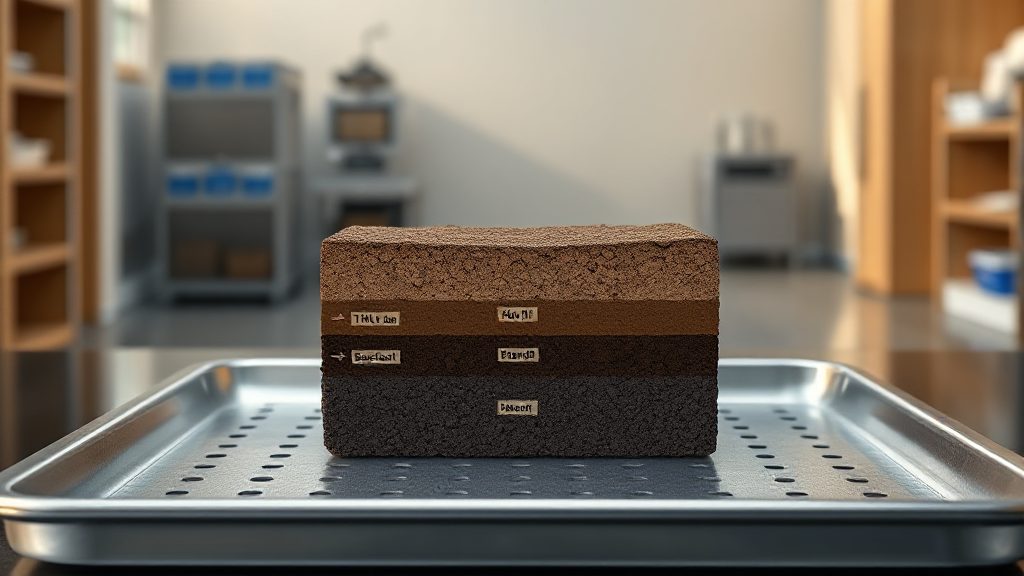
Core Sample: What a Narrow Probe of inwa777 Returns
Lowering a narrow sampler into the domain inwa777 brings up almost nothing: no title, no description, no visible text, no heading. That emptiness is not a failure of the probe. It is the finding, and it tells you exactly how much a single sample can support.
This article treats the domain as a geological site and reports the strata a core sample actually recovers. The goal is not to fill the gaps with guesses but to show where the material ends and interpretation must stop.
Sampling Method and Borehole Limits
The sampler was a standard surface probe: fetch the public page, read the title, description, H1 and visible copy, and record brand terms. That is the equivalent of a shallow borehole — enough to identify surface material, not enough to map a formation.
The tool recovered no title, no meta description, no H1 and no visible text for top444.club. The only reliable signal was the brand term itself. Absence of metadata is data, not a blank result.
What the Probe Could and Could Not See
The probe could confirm that the domain resolves and that the brand string appears as an entity. It could not confirm a niche, a business type, a product, a service or an audience. Those layers sit below the sampled depth.
Confidence in any niche inference was recorded at 0.05 — effectively noise. A sample that thin cannot distinguish a content site from a placeholder from a brand shell.
Why a Single Core Is Not a Map
One borehole describes one point. Extrapolating a business model from a missing title is like naming a rock formation from a single grain. The correct move is to report the grain and mark the rest as unknown.
This is why the sample is presented strata by strata rather than as a conclusion about what the site does.
Strata-by-Strata Findings
Reading the core from top to bottom, each layer returned less than the one above it. The table below summarizes what the sampler recovered at each depth.
| Stratum | Expected Material | Recovered |
|---|---|---|
| Title tag | Page name and topic | None |
| Meta description | Summary and intent | None |
| H1 heading | Primary subject | None |
| Visible text | Niche and offer | None |
| Brand term | Entity name | top444.club |
Surface Layer: Title and Description
The title and description layers came up empty. In SEO terms, that means the page offers search engines no explicit statement of topic. A crawler sees a URL and a brand, not a subject.
For a reader, it means the first thing a search result would show is the domain itself, with no summary to set expectations.
Mid Layer: Headings and Body Copy
The H1 and visible text layers were also barren. There was no paragraph to parse for keywords, no navigation labels, no calls to action. Without body copy, intent cannot be classified.
This is the layer where a normal probe would recover the niche. Its absence is the strongest signal in the core.
Basement Layer: The Brand Entity
The deepest recoverable material was the brand term, top444.club. The name is an entity label, not a description. The numeric string should not be read as a literal meaning, a category or a coded reference.
Treating the brand as a name rather than a topic is the only defensible reading of this layer.
Interpretation Limits and Common Misreads
The main risk with a thin core is over-reading it. When a sample returns little, analysts tend to project meaning onto whatever remains — usually the brand name.
Several misreads are predictable here. Reading the digits as a category is one. Assuming a niche from the domain shape is another. Both invent material the borehole never recovered.
Misleading Inferences to Avoid
- Inferring a niche from the numeric portion of the brand.
- Assuming a business type because the domain looks commercial.
- Treating a missing title as evidence of a hidden category.
- Filling the empty strata with plausible-sounding guesses.
Each of these converts an unknown into a false known. The honest output of a thin core is a list of unknowns.
What Would Deepen the Sample
A deeper probe would need new material: rendered page content, navigation structure, published copy, or an explicit statement of purpose from the operator. None of that was present in the supplied evidence.
Until such material exists, any claim about the site’s business or topic remains unsupported. The core sample stays at 0.05 confidence, and that number should be reported, not hidden.
Conclusion: The Emptiness Is the Result
A narrow probe of inwa777 returned a brand string and almost nothing else. No title, no description, no heading, no body copy. The strata above the brand layer were barren, and the interpretation limit is set by that barrenness.
For anyone evaluating the domain, the practical takeaway is to treat it as an unidentified entity. The name is known; the niche is not. A single core sample cannot close that gap, and pretending otherwise would be the only real error in the exercise.