Inside Zona Norte Plumbing Stacks: Where Blockages Really Start
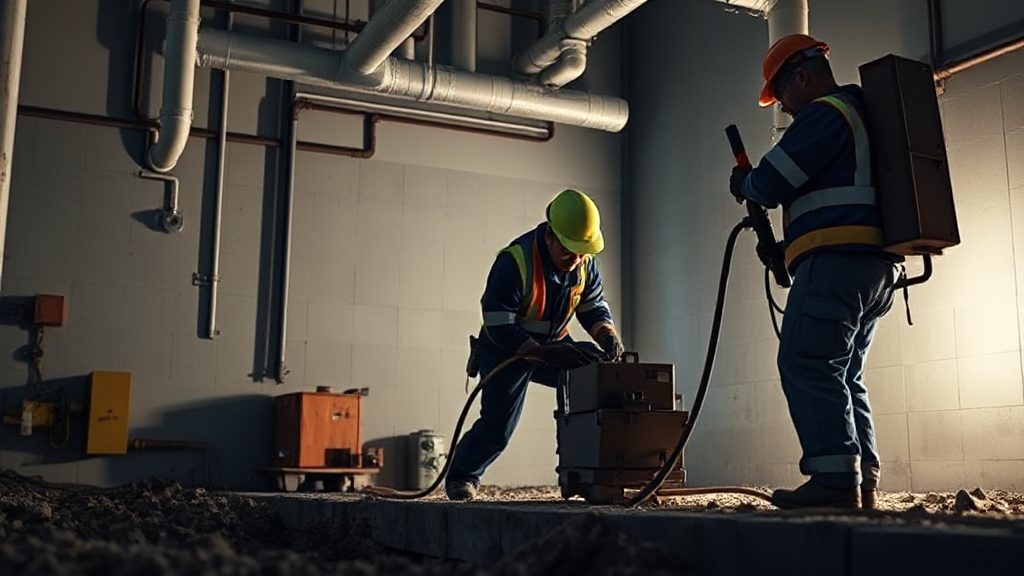
If you live in a 1980s mid-rise in Zona Norte, you already know the sound: a gurgle from the kitchen drain, a slow rise in the shower tray, and then the dreaded backup that floods the same apartment twice a year. The problem is rarely the fixture itself. It is almost always inside the vertical waste stack that runs behind the walls, collecting grease, soap scum, paper and sediment until the pipe narrows to a slit. When you finally call a desentupidora barata em Zona Norte, the technician does not start at your sink; they start at the stack and work downward. This article traces that path segment by segment, so you can understand why the same clog returns and what a genuinely low-cost service should actually fix.
The vertical stack: why the same apartment floods twice a year
A vertical waste stack is the main artery that carries sewage from every floor to the ground. In older Zona Norte buildings, these stacks are often 100 mm cast iron or galvanized steel, installed with tight bends and few cleanouts. Cast iron corrodes from the inside, creating a rough surface that grabs grease and paper. Galvanized steel scales and narrows. Either way, the stack loses diameter year by year, and the top floors suffer first because they have the longest run and the least gravity assist.
The telltale sign is a backup that appears in the lowest fixture of a unit, not the one you just used. If your kitchen sink drains slowly but your neighbor’s floor drain bubbles, the blockage is already in the shared stack. A cheap fix that only snakes your sink will not touch it. The correct approach is to open a cleanout on the stack, rod or hydrojet from the top down, and verify flow at multiple floors. That is why the first question any honest technician asks is not “what is clogged?” but which fixtures share the same stack.
Diagnostic symptoms at the stack
- Gurgling in one unit when another unit flushes.
- Slow drainage that worsens on upper floors.
- Recurring backups at the same floor every few months.
- Foul odor near a wall or ceiling, suggesting a crack or joint leak.
The branch lines: where grease and hair build their first dams
Branch lines are the short horizontal pipes that connect your sink, shower and toilet to the stack. They slope gently, and that gentle slope is exactly where trouble starts. Kitchen branches collect grease that cools and hardens on the pipe wall. Bathroom branches collect hair, soap residue and toothpaste, which bind into a felt-like plug. Because these pipes are narrow, a small dam can raise water levels enough to trigger a backup in a matter of weeks.
In shared buildings, branch lines are also where improper use shows up fastest. Cooking oil poured down the sink, wipes flushed down the toilet, and hair shed into the shower all land in the same short run. A technician who only plunges the fixture pushes the plug deeper into the branch, where it hardens again. Proper clearing means removing the trap, rodding the branch to the stack, and flushing with water to confirm the line is fully open. If you need a desentupidora Zona Norte São Paulo SP service that understands this distinction, ask whether they rod the branch or just plunge the drain.
Diagnostic symptoms at branch lines
- One fixture drains slowly while others in the same unit are fine.
- Standing water in a shower tray that clears after a few minutes.
- A gurgle from the trap when the fixture drains.
- Repeat clogs in the same sink within weeks of cleaning.
The ground-floor grease trap: the hidden cost center
Many Zona Norte buildings have ground-floor commercial units, and those units often rely on a grease trap or a small separation box before waste enters the main drain. Grease traps work only if they are maintained. When they are ignored, fats, oils and food solids fill the chamber, and the trap stops separating anything. The result is a solid plug that backs up into the commercial unit and, eventually, into the residential stack above it.
A cheap desentupimento service that only clears the line downstream of the trap leaves the source untouched. The correct sequence is to pump and clean the trap first, then jet the line from the trap to the street connection. For a building, this is not a luxury; it is the difference between a one-time repair and a seasonal repeat. If you manage a property, keep a simple log of trap cleaning dates and line-jetting dates, because insurers and buyers increasingly ask for it.
Diagnostic symptoms at the grease trap
- Slow drainage in ground-floor sinks and floor drains.
- Grease odors in the commercial unit or nearby corridor.
- Backups that appear after busy kitchen hours.
- Visible grease accumulation in the trap chamber.
The building drain: the horizontal run under the slab
Below the stack, the building drain runs horizontally under the slab or crawlspace to the street connection. This is where sediment, scale and roots do the most damage. Older pipes sag, creating low spots where solids settle. Tree roots enter through joints and hairline cracks, forming a sieve that catches everything passing by. A camera inspection is the only reliable way to see what is happening here, and it is also the fastest way to avoid paying twice for the same problem.
When a technician arrives, ask whether the building drain will be camera-inspected before and after clearing. A cheap service that skips the camera may open a hole through the blockage but leave roots and sediment behind. Hydrojetting at controlled pressure is usually the right tool for this segment because it scours the full pipe wall rather than punching a channel through the middle. If the drain is collapsed or heavily root-infested, spot repairs or a liner may be cheaper over five years than repeated emergency calls.
Diagnostic symptoms at the building drain
- Multiple units backing up at the same time.
- Slow drainage throughout the ground floor.
- Gurgling from floor drains when upper floors use water.
- Soggy patches or odors near the building perimeter.
The street connection: where private and public responsibility meet
The street connection is the point where the building’s private drain meets the public sewer. Responsibility usually shifts at the property line, and that boundary matters when you are comparing quotes. A blockage at the connection can look identical to a blockage inside the building, but the fix and the cost are different. If the public side is obstructed, the utility is responsible; if the private side is obstructed, the building is. A camera survey confirms which side you are on before anyone starts digging.
This is also where cheap quotes often hide extras. A low base price may cover only the first few meters of rodding, with additional charges per meter beyond that. Ask for a written scope that states the starting point, the ending point, the method and the disposal of waste. A reputable desentupidora em Zona Norte São Paulo SP will explain the boundary and provide a fixed price for the private segment before work begins.
Diagnostic symptoms at the street connection
- Backups that affect the entire building at once.
- Slow drainage that does not improve after internal clearing.
- Wastewater surfacing near the sidewalk or inspection box.
- Recurring problems after heavy rain.
What a genuinely cheap service should include
Price matters, especially for a síndico balancing a condominium budget. But cheap should mean efficient, not incomplete. A fair quote for a stack-to-street clearing typically includes diagnostics, access through existing cleanouts, mechanical or hydrojet clearing, a flow test, and proper disposal of removed material. It should also state whether a camera inspection is included and what the call-out fee covers. Comparing quotes on price alone is how buildings end up paying for the same clog three times.
There is a practical way to compare: ask each provider to describe the segment they will treat and the evidence they will leave behind. A provider who can explain the stack, the branch, the trap and the building drain in plain language is usually the one who will solve the problem rather than move it. Keep the report and photos; they become your baseline for the next maintenance cycle.
Comparison points for quotes
| Item | What to confirm |
|---|---|
| Scope | Which segments are included: stack, branch, trap, building drain, street connection |
| Method | Rodding, hydrojetting or both, and at what pressure |
| Inspection | Camera before and after, with images provided |
| Waste disposal | Who removes and disposes of the material |
| Warranty | Period covered and what voids it |
Preventive maintenance that actually prevents repeats
Once the system is clear, the goal is to keep it that way. For older Zona Norte buildings, a simple annual routine beats emergency calls. Schedule branch-line cleaning in units that cook heavily, pump the grease trap quarterly if there is a commercial kitchen, and jet the building drain every one to two years depending on tree cover and pipe condition. Keep a log of every service, including the date, the segment treated and the method used.
Residents also play a role. A short notice in the lobby about not pouring oil down sinks and not flushing wipes prevents most branch-line clogs. For the building drain, root control is the main issue; if roots are present, plan for periodic cutting rather than waiting for a backup. The goal is not to eliminate every clog but to stop the same apartment from flooding twice a year, which is exactly what happens when maintenance is reactive instead of scheduled.
When the next backup arrives, start at the stack and work downward. Identify which fixtures share the line, check the branch, inspect the trap, camera the building drain, and confirm the street connection. That sequence turns a recurring emergency into a manageable maintenance item, and it is the difference between a cheap fix and a lasting one.